Sherie Gibson has been a certified wildlife rehabber in the Lowcountry for nearly two years, working primarily with squirrels, opossums, and raccoons. She volunteers with Palmetto Wildlife Rescue & Rehabilitation and responds to calls throughout Hilton Head Island and the Bluffton area. We talked with Sherie about what actually happens when someone finds an injured or orphaned wild animal, what people get wrong, and a few things about local wildlife that might genuinely surprise you.
If You Find an Animal
What are the most common calls you get from the public?
Injured or orphaned squirrels, raccoons, and opossums. Those three make up the bulk of what we see in this area.
Who should someone call first?
There are two main organizations I’d send people to:
Palmetto Wildlife Rescue and Rehabilitation — 803-969-0803 | palmettowildlifesc.com
They’re a statewide network divided into regional chapters. I’m part of the Lowcountry group, which covers Colleton, Beaufort, and Jasper Counties. When you call, you’ll reach a coordinator who’ll ask what you found, request a photo, get your location, and text the nearest available rehabber. That person contacts you directly.
Keeper of the Wild — 843-636-1659 | keeperofthewild.org
They serve the Lowcountry exclusively and have a physical facility in Walterboro. Same process: call, describe the situation, send a photo.
One tip for both: if nobody answers, send a text. Both organizations actively monitor texts. A text with a photo, your location, and your contact number is the fastest way to get help.
What’s the single most important thing to know if you find orphaned wildlife?
Don’t attempt to feed — and please keep babies and injured wildlife warm. Cold babies must be warmed up if they are to survive. You can place a rice-filled sock that’s been gently warmed in the microwave next to them.
If it’s an adult animal, you can set out a bowl of water. But if it’s a baby — no food, no liquids of any kind. When a baby is dehydrated, we need to rehydrate them precisely using electrolytes. That’s our job. A baby can go a couple of days without food and we can pull them back. But if someone feeds them first, we’re starting from a much harder place.
People mean well. They think: milk. We’ve had people give breast milk, goat’s milk, cow’s milk. And for some reason people assume Kitten Milk Replacer (KMR) is a good option. It’s not — KMR is the one that will kill them the fastest, because baby squirrels and raccoons have no ability to digest it. Even pet store employees will sometimes recommend it. Please don’t.
What we use is puppy milk replacer — Esbilac — but in very specific ratios, combined with precision formulas like Fox Valley or Zoologic. Don’t attempt to feed a wild baby with anything, including a bottle or syringe. Call first. Always.
What’s the goal when an animal comes in?
Reunification first, always. We try to get the animal back to its mother before anything else. Taking an animal to a rehabber is the last resort, not the first step. If you call either organization, they’ll walk you through the process of giving the mother a chance to come back.
What do people do wrong when they find wildlife?
The biggest mistake with raccoons is touching them. We understand the instinct — you want to help. But if a finder touches a raccoon and gets scratched or bitten, that animal is automatically euthanized by law. The head is sent off for rabies testing. We are vaccinated. You aren’t. The safest thing you can do is place an overturned laundry basket or a box with holes over the animal, weigh it down, and then call us.
Fawns are another one. Mother deer leave their babies in the morning and go feed all day. They come back in the evening. If you find a fawn curled up in your garden, it is almost certainly not abandoned — mom put it there because she thought it was a safe space. Leave it alone and keep your dogs inside. We had a situation recently where a family let their children handle a newborn fawn. The DNR came and euthanized it and sent the head for testing. The chance of a healthy fawn carrying rabies is essentially zero. That animal died because no one knew to leave it alone.
The general rule is: don’t touch wildlife. Call first.
What about birds, turtles, or other species — is the process the same?
Each species has its own protocol, and this is where Keeper of the Wild’s website is really useful. If you go to keeperofthewild.org and click “Found an Animal,” you’ll find species-specific instructions. Birds of prey and shorebirds have their own contacts. Turtles have a separate person. Alligators have their own protocol entirely. Don’t guess — check the site first. Palmetto Wildlife’s website has similar guidance.
Should people be worried about rabies and distemper in the area?
We’re in the middle of a distemper outbreak in this area right now. There have been confirmed rabies cases nearby — one in Bluffton and one at Moss Creek Plantation. Not on Hilton Head Island itself, but in the region.
Here’s the tricky part: distemper and rabies look almost identical in raccoons. So does a head injury from a car accident. A raccoon that looks drunk, dazed, or confused — don’t approach it. Don’t assume it’s just injured and safe to handle. Call Keeper of the Wild or Palmetto Wildlife.
What happens with opossums after a storm, or if you find babies without a mother?
With opossums, if you find babies and mom is not with them — mom is not coming back. Opossums are totally attached to their mother for around one month, and after that they ride on her fur or stay in her pouch. They can fall off. And opossums can’t count. She doesn’t know one is missing, and she won’t come back for them. Raccoons and squirrels are different — for those species, it’s always worth giving the mother a chance to return.
After a Storm
What should people look for after a hurricane or major wind event?
Nests get blown down — including the dreys (colony nests) of flying squirrels, which can come down from trees quite often. If you see a ball of pine needles or leaves on the ground, look carefully — it could be a squirrel nest with babies inside.
If the mother is still alive, she’ll typically relocate them on her own. You can help by getting them out of the direct sun: tuck them under a bush, or put them in a small basket tied low on a tree nearby. You can also play squirrel distress sounds — gray squirrel, fox squirrel, and flying squirrel distress calls are all different, so try to match the species. They’re all on YouTube. Give the mother time to find them. But if any of the babies are visibly injured, call right away.
One thing to know going into hurricane season: squirrels have their second litter at the beginning of August. Storms knock nests down. August and September are historically some of the busiest months for orphaned squirrels.
Behind the Scenes
What’s the rehab process actually like?
A neonatal animal — eyes not even open — will be with me for up to 12 weeks. We’re feeding every few hours, including overnight. For raccoons and opossums, it can mean being up every two hours for the first couple of weeks.
At 12 weeks, the animal moves to a “pre-release” rehabber who has outdoor pens. Human contact drops to basically nothing — twice a day for food and water only. The goal is to let them “wild up.” When they’re ready, we open a small door in the pen. They go out and explore, come back, go out again. One day they don’t come back. We keep feed stations out for a while, especially in winter, just to support them through the transition.
I’m in an HOA in Sun City, so I can’t run outdoor pens. I handle the neonatal and juvenile stages and then hand off to a colleague with the right setup.
Is there a busy season?
It varies by species. March through May is typically very busy for squirrels and opossums. Right now — late June — I’ve been getting one to two raccoon calls every day, which is unusual. I can’t say for certain if it’s a pattern, but development is almost certainly a factor. Every time a new tract is cleared in the Bluffton area, our numbers go up.
Fall is important to understand for squirrels: we don’t release them in winter because squirrels need leafed-out trees for food. An animal that comes in during August or September stays with us until mid-March or April. Fall babies are a long commitment.
Is rehabbing expensive?
It is. I recently took in a squirrel whose hind end wasn’t working. One visit, one x-ray — $220. For a tiny squirrel. Individual rehabbers fund this out of pocket. The formula alone adds up quickly, and we use very specific precision formulas, not off-the-shelf products.
What’s the most surprising rescue you’ve had?
I had a little squirrel whose paw had been cut off in a chainsaw accident. That was particularly challenging, but we were able to save him. He made a full recovery and was released. And then there was a raccoon that had gotten his head stuck in a jar — which is why it matters to put the lid back on containers before you recycle them, and cut the rings on plastic six-pack holders. These things do happen.
The Wildlife You Didn’t Know Was Here
Are there species on Hilton Head that most people don’t realize are here?
Three things come to mind.
First: opossums eat snakes and are nearly immune to venomous snake venom. That’s worth knowing. They’re doing a lot of quiet, underappreciated work in this ecosystem.
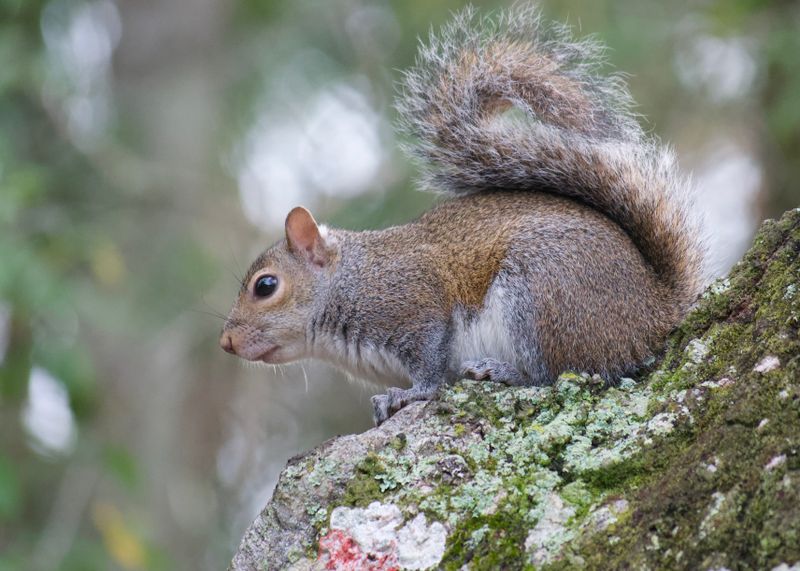
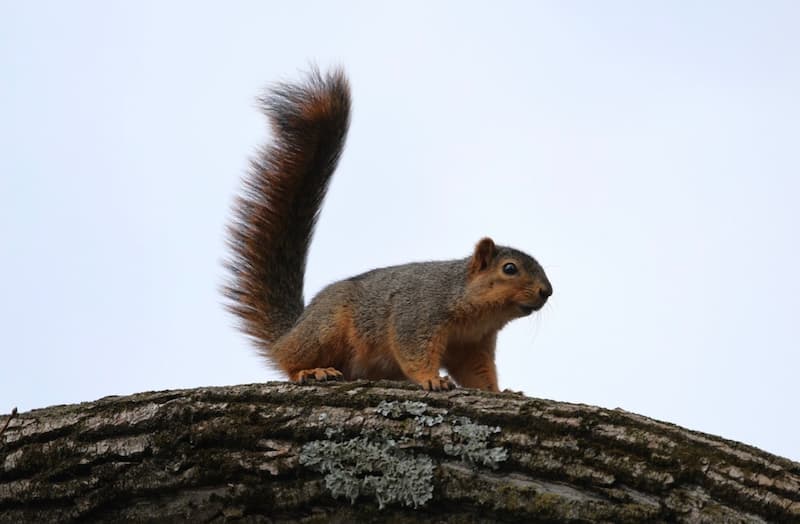
Second: there are three kinds of squirrels on Hilton Head, not one.
The gray squirrel is the one everyone knows. But we also have fox squirrels, which are at least double the size — some people who see them for the first time think they’re a cat. Their coloring varies: silver with a black face, all black with a white face, and variations in between with white markings on the nose and tail tip. They tend to live where there are mature pines.
The third species is the one that genuinely surprises people: the southern flying squirrel. They’re active at night, so almost nobody knows they’re here. They’re about a third the size of a gray squirrel, maybe smaller. They have oversized eyes for low-light vision, a flat tail that acts as a rudder, and a flap of skin between their legs that they spread like a wing to glide. They don’t actually fly — they glide. And they live in colonies of 12 to 36, all in one nest called a drey.
Rehabbing flying squirrels is particularly involved because they need a colony to survive. When I’ve had them, I’ve had to coordinate with other rehabbers across the state to build a group large enough to release together.
You mentioned wild animals don’t make good pets — can you say more?
Squirrels, raccoons, opossums — they don’t make good pets. Wild animals need to wild up. The goal of every rehab is release. When people keep them, they lose the skills and social connections they need to survive. It’s not a kindness.
Getting Involved
Is there a shortage of wildlife rehabbers in the area?
Yes. Definitely. Palmetto Wildlife offers training — they just held a full day of classes two weekends ago. Keeper of the Wild offers training as well. I’ve done both, and I go back every time they offer them again, because there’s always something new, and because the training sessions are also how you build your local network.
That network matters. When I have an animal with a situation I haven’t seen before, I reach out to other local rehabbers who may have dealt with it. We share knowledge because the work is hard and expensive, and the more people we have doing it, the better.
If you’re interested, start with either Palmetto Wildlife Rescue & Rehabilitation or Keeper of the Wild. Both offer training for new volunteers.
How can people support rehabbers without becoming one?
The two biggest needs are money and formula. Donations to Keeper of the Wild and Palmetto Wildlife Rescue go directly to medicine and formula. Both are 501(c)(3) nonprofits, so donations are tax-deductible.
And honestly — knowing who to call, and making that call before you pick anything up, is one of the most meaningful things the public can do.
Sherie Gibson volunteers with Palmetto Wildlife Rescue and Rehabilitation (803-969-0803) and recommends Keeper of the Wild (843-636-1659) as an additional Lowcountry resource. She responds to calls on Hilton Head Island and in the Bluffton area.
Have a wildlife situation right now? Visit our Wildlife Resources & Rehab page for contacts, species-specific guidance, and what to do while you wait for help.
Found an orphaned squirrel? Save or print this step-by-step guide to keep on hand.
📄 Download the Squirrel Guide (PDF)Hear the Distress Call
Playing a recording of the correct species’ distress call can help draw a mother squirrel back. Match the species below before playing.